












2004 March
March 17, 2005
From the President
March 2004
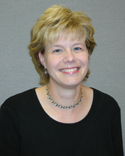
As I write my final article "From the President", it seems hard to believe that almost a year has past since the gavel was passed to me. This time has gone by quickly and I've really enjoyed the opportunity to serve NeASFAA in this role. It has been a privilege to work with a great Board of Directors and dedicated committee chairs and committee members. I thank them, and all of you, for your support - it really has made a difference.
As NeASFAA President, I currently serve on the RMASFAA Board of Directors. This has been a great experience, especially since the 2004 RMASFAA Conference is in Omaha. Judi Walker and the Conference Planning Committee are working diligently to organize this event. This is our opportunity to showcase Omaha, and the state of Nebraska, so it would be wonderful to have strong attendance from NeASFAA members. The service organization we will be supporting at the Conference is Habitat for Humanity. This is exciting as it appears that we may even have the opportunity to participate in a build!
In other news from the RMASFAA winter board meeting, we learned that the format of the Summer Institute will change rather dramatically. Summer Institute will consist of five tracks geared toward everyone from neophytes to seasoned financial aid veterans. Although the training will still focus heavily on the NASFAA Core training materials, the tracks will have a little more crossover in topics than they have in the past. It'll be "A Gem of an Opportunity", and I encourage you to attend if you can.
Finally, don't forget that our Spring Conference is right around the corner. It will, once again, be a great opportunity to learn and network with your fellow NeASFAA colleagues. I hope to see you all there!
Take care,
Deana
News Room
| Index: | |
| Leadership Book Review Default Prevention Listserv Now Available You're Not Running for Congress? |
Leadership Book
Review
By Melinda Hogeland
If you are an individual that seems to find yourself attending
meetings more times than not, then you may want to check out an
interesting book called How To Make Meetings Work by
Michael Doyle and David Straus.
When I picked this book off the shelf I was thinking to myself that this was just another self help book designed to tell people what they are doing wrong, however, it really does offer some great tips if you attend meetings on a regular basis. The book covers a variety of topics including starting and ending meetings on time, designing agendas that are practical, keeping an agenda on track, dealing with people that talk or criticize too much, increasing group participation, and nailing down accountability amongst group members.
If you're not acting as the meeting "organizer", the book does cover a variety of topics that can make you a better meeting participant. This includes such ideas as how to be a good note taker or group recorder, how to be a good listener, how to help the meeting facilitator stay on track with the agenda, and even some ideas on where to sit while at the meeting.
We all spend time attending meetings either on a daily or weekly basis. These meetings may be work related or not. So if you are looking to "touch up" your meeting skills, either as the organizer or meeting participant, I would recommend reading a copy of How to Make Meetings Work.
(The Communications Committee will be giving away 3 copies of this book at Spring Conference. Good luck!)
Default
Prevention Listserv Now Available
Following discussions with the U.S. Department of Education,
Rutgers University agreed to host a National Default Prevention
Listserv. This list has been in operation since November 2003, and
currently has 450 subscribers. The list is open to all financial
aid officers, lenders, servicers, guarantors, education department
personnel and their contractors. It provides an opportunity to
exchange information about default management best practices and
available services. ED's Federal Student Aid Office will post items
of interest to the financial aid community on a monthly basis. All
financial aid professionals are invited to contribute to the
discussion.
To subscribe to the list, send a message to LISTSERV@EMAIL.RUTGERS.EDU with the command "SUBSCRIBE DEFAULT_PREVENTION@EMAIL.RUTGERS.EDU your name" in the body of the message.
You're Not
Running for Congress?
By Dan Brent
Citibank
In January I listened to President Bush's State of the Union Address.
Well, that's not entirely true. I actually listened to about five minutes of the address. I turned it off, annoyed with the partisanship of the remarks. I perceived it as an "Us and Them" speech. It wasn't really George W. that annoyed me. It was the partisanship of the whole political system that we have. I was just as annoyed at Ted Kennedy sitting on his hands suffering through the event. "Us and Them".
I've heard the English adversarial system that we've adopted for our courts described as a terrible system - but the best that anyone has ever come up with. Maybe the same can be said for our adversarial political system - terrible but the best we can do. There are those who have power and then there is the "loyal opposition".
But it still seems sad to me. I remember trying to get to sleep that night and being kept awake by formulating my own version of the "State of the Union" speech.
"My colleagues in the Congress. Each of you has been sent here by your constituents to create for this nation the best that our resources can provide. The same is true of me. And, even though this is an election year, it is incumbent on us - you and me together - to dream our best dreams for this country and concoct the best plans and programs that we can create together.
"And it doesn't matter who gets credit. What matters is that we look after our less fortunate brothers and sisters, educate our children, provide for the safety of our citizens, and find ways to be a good neighbor to the world community.
"To do that we must work together. The energy we spend fighting each other is lost to the real common cause on which we are elected to deliver. When we - or our predecessors - have accomplished anything in the past, it has been by compromise. But even that is settling for half. That's no longer enough. We need to develop a mind-set of consensus. That means we listen to each other, debate until we understand the pro's and con's, and then commit to the best we think we can do. Together.
"So ask not how we can thwart each other's plans. Ask rather how we can pool our wisdom and enthusiasm to create our best America together."
Naive. I know. Politics will never be that way. I know.
But what about your office? Congress isn't the only place where options are argued out, plans are made, and winners and losers are created. The effectiveness of your collective service to your students is dependent on your collective ability to buy into a common vision and work together to pursue it.
I do a training session that puts people into small groups and requires them to reach some group decisions. I listen in to the discussions. Almost invariably, each group will afterwards proclaim that its decisions were reached by consensus. Having listened in, I know better. Most often the truth is that the decisions were reached by majority rule, or by what I call the "tyranny of the vocal", or by manager's edict. Consensus happens when everyone's thinking is heard out for its merits and then each individual agrees to support the ultimate decision. Getting to that point takes time and finesse. Rarely do groups have the patience and skills to achieve it.
But how worth it the effort is! At your place the stakes aren't as high as they are for Congress. But - until you get elected to Congress or the Presidency - it's the world you can influence. Together.
Dan Brent is a Professional Development Officer with Citibank. He regularly presents seminars for Financial Aid people.
Committee Corner
March 2004
CORPORATE DEVELOPMENT
COMMITTEE
by Cindi Ramaeker
 Since the formal request for
Sponsorship Pledges for the 2003-04 year was made via email on July
31, 2003, commitments and payments include:
Since the formal request for
Sponsorship Pledges for the 2003-04 year was made via email on July
31, 2003, commitments and payments include:
- 17 responses with paid sponsorships totaling $12,500
- EducationQuest Foundation has agreed to a Philanthropy Match up to $1,000
- 14 commitments to exhibit at the Spring '04 Conference
I would like to thank the following organizations for their
support of NeASFAA:
ASAP/Union Bank & Trust
Citibank
College Board
Educaid
EducationQuest Foundation
First National Bank of Omaha
First National Beatrice
Foundation for Educational Services
Iowa Student Loan
National Student Loan Program
Nelnet
NSA
Platte Valley State Bank
Sallie Mae
TERI Education Loans
U.S. Bank
USA Funds Services
Wells Fargo EFS
Comparing this year to last year, we have $650 less in sponsorship pledges and 3 fewer exhibitors. In January 2004, email communications were sent to Commerce Bank and Wyoming Student Loan Corporation offering them the opportunity to be a sponsor/exhibitor.
In the upcoming weeks, our committee will begin to work closely with the Associate Sector on the philanthropy project for the Spring '04 Conference.
AWARDS COMMITTEE
by Joan Jurek
 The Awards Committee has been
busy preparing for Spring Conference. Not only do we have the honor
of awarding NeASFAA members for their distinguished service, we
have a lot fun honoring those deserving of a "fun award." Although,
it's too late to nominate for the prestigious awards, please keep
in mind those members who should be recognized for a fun award. We
have some great stories. If you have one to share, you may contact
any one of the following committee members:
The Awards Committee has been
busy preparing for Spring Conference. Not only do we have the honor
of awarding NeASFAA members for their distinguished service, we
have a lot fun honoring those deserving of a "fun award." Although,
it's too late to nominate for the prestigious awards, please keep
in mind those members who should be recognized for a fun award. We
have some great stories. If you have one to share, you may contact
any one of the following committee members:
Joan Jurek, Chair
Kathy McConnell, Co-chair
Kay Dinkelman
Steve Millnitz
Tammi Preston
We look forward to seeing you at Spring Conference!
PROFESSIONAL DEVELOPMENT
COMMITTEE
by Mark Krings
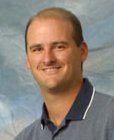 Spring is right around the
corner and so is the NeASFAA Spring Conference in North Platte. The
conference is scheduled for April 14 -16. If you plan to attend,
you can register on-line. If you are
planning to stay over at the Quality Inn and Suites, please take
the time to make your room reservations as well.
Spring is right around the
corner and so is the NeASFAA Spring Conference in North Platte. The
conference is scheduled for April 14 -16. If you plan to attend,
you can register on-line. If you are
planning to stay over at the Quality Inn and Suites, please take
the time to make your room reservations as well.
The agenda is packed full with sessions that should provide something for everyone. Our general sessions include:
- Mark Cullinan, FBI will discuss national security issues, foreign students and the challenges they face, and general safety tips.
- Jeff Baker, Dept. of Education will join us via teleconference to address Reauthorization and the IRS data match.
- Jeanne Baer, Creative Training Solutions with some customer service tips we can all utilize.
- Jessica Fuchs, Attorney General's Office will discuss Identity Theft.
In addition, there will be breakout sessions, sector meetings, and plenty of relaxation with friends taking place during the conference. The Professional Development Committee invites all of you to join us in North Platte.
MEMBERSHIP COMMITTEE
by Wendy Olson
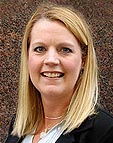 The
Membership Committee has been hard at work over the past months
preparing for the grand unveiling of...drum roll please...the new
Membership photo directory! Jenni Burke is finishing up the final
touches on the directory, so we can hand it out at Spring
Conference. You won't believe it when you see it! Glossy pages and
bound, it is quite the professional tool for finding those folks
with whom you just can't place the name with the face. Also useful
to see, what others see when they look at you!
The
Membership Committee has been hard at work over the past months
preparing for the grand unveiling of...drum roll please...the new
Membership photo directory! Jenni Burke is finishing up the final
touches on the directory, so we can hand it out at Spring
Conference. You won't believe it when you see it! Glossy pages and
bound, it is quite the professional tool for finding those folks
with whom you just can't place the name with the face. Also useful
to see, what others see when they look at you!
The other big project on our committee's agenda right now is of course the fast approaching New Comer's Welcome at the Spring Conference. We may not beat our record total of 22 from Fall Institute, but I am sure fun will be had by all!
Lastly, we are gearing up to pass the torch to next year's committee. Although the people will not be the same, I am sure that the sentiment will be. Membership has is privileges! Ok, so I stole that, but I tell you we were a great group of great people who had a great year!
Take care, and I hope to see everyone at Spring Conference!
March 2004
GETTING TO KNOW...
Jack
Burdick
Director for Student Financial Services
Union College - Lincoln, NE
 Jack Burdick got his
start in financial aid at Union College in June of 2003. He was
quickly sent off to the RMASFAA Summer Institute for a "crash
course" in financial aid because he needed to quickly put his
skills and knowledge to use at Union College. "I really appreciate
all the support I have received from the financial aid community.
My greatest reward is that I am able to help students achieve their
dream of earning a college degree."
Jack Burdick got his
start in financial aid at Union College in June of 2003. He was
quickly sent off to the RMASFAA Summer Institute for a "crash
course" in financial aid because he needed to quickly put his
skills and knowledge to use at Union College. "I really appreciate
all the support I have received from the financial aid community.
My greatest reward is that I am able to help students achieve their
dream of earning a college degree."
Jack grew up in Tennessee. He is a CPA and received his BA in Economics from the University of the South and his MBA from Vanderbilt University. Prior to moving to Nebraska, Jack and his family lived in Atlanta for 9 years, where he worked as a financial analyst for MCI Telecommunications and as a systems analyst for Scientific-Atlanta.
Family and living "the good life" brought Jack and his family to Nebraska. Prior to taking his position at Union College, he was an accounting manager for a small plastics deck and fencing company in York. Jack and his family enjoy being close to grandparents and the family-friendly atmosphere of Lincoln.
Jack and his wife, Janene, have been married for 7 years. They have two children, John, 4, and Joy, 2, and a second son due any day. A side note: John and Joy celebrate the same February 8 birthday and were born EXACTLY 2 years and 1 minute apart! You may also want to extend warm birthday wishes to Jack as he just turned the big 4-0 on March 6.
Away from work, Jack spends most of his time being a dad. One of his favorite places to take the kids is the Lincoln Children's Museum. Having lived in Baltimore for 3 years and Atlanta for 9, he is also a big baseball fan and hopes to hit Haymarket Park this spring and summer.
Movers & Shakers
March 2004
The following stories are the latest in an ever changing Nebraska world of financial aid.
 Weather: Blue
and Overcast (Boy, are we blue about
departures):
Weather: Blue
and Overcast (Boy, are we blue about
departures):
Dana College said good-bye to Amy Lyons. Our best
wishes go to Amy in her new position in Continuing Education.
Clarkson College said good-bye to Wendy Cobb. We wish Wendy the best of luck and hope to see her back in Financial Aid soon.
College of St. Mary said good-bye to Jenny Mosher. Good luck Jenny!
It is with congratulations and sorrow that the world of financial aid will bid adieu to Michelle Reeson of Midland College. Michelle has accepted a position at Midland in another department full time! We are so happy for her opportunity, yet will miss her greatly!! Be sure to wish her well when you see her!
Other
Weather: Sunny skies
Will Peanuts creator Charles Schultz be her new father-in-law? Heck
no, but Laura Jandl from Wells Fargo will have
Schultz for a new last name! Laura was recently engaged to be
married!! Don't be blinded by her new engagement ring! They are
tying the knot June 3, 2005. Congrats to the bride and groom!
Now don't let the glare from Shareen Cundall's (of UNO) new engagement ring blind you either! Shareen and boyfriend Craig will be tying the knot this summer in Lincoln! We will let her give the lessons on pronunciation of her new last name! Best of luck you two crazy kids!
 News:
News:
Western Nebraska Community College reports that they have a new
addition to their office staff. Grace Hendrickson
goes from working part time since August of 2001, to full time
member of the family. Grace will fill the position of Michelle
Mashmeier. Welcome Grace!
Doane College welcomes Nicole Wendelin to their
Lincoln Financial Aid office. Welcome Nicole!
 Celebrity News:
The new NeASFAA board of directors is getting ready to meet for the
first time and committees will be announced soon! Otherwise, things
seem to be quiet on the home front!
NSLP Update
March 2004
NSLP
Supports Students through Scholarship Donations
by Mark Krings
Regional Director
National Student Loan Program
During 2004, NSLP will help Nebraska students pay college expenses through a $5,000 contribution to the Reaching Your Potential scholarship program, and by doubling the funds awarded through its Cash for Class program.
Reaching Your Potential is a program of EducationQuest Foundation - a private nonprofit organization headquartered in the same downtown Lincoln location as NSLP. NSLP's contribution will add to the $80,000 EducationQuest will award this year in renewable, need-based scholarships to Nebraskans who overcome obstacles to attend college.
Through Cash for Class, NSLP provides scholarship funds each year to schools throughout the country. NSLP selects the schools during drawings at conferences for RMASFAA, MASFAA, SWASFAA, SASFAA, WASFAA, and EASFAA. The program is so popular among schools that NSLP recently doubled its Cash for Class contribution. This means twelve schools will each receive $1,000 they can award to deserving students.
"We're pleased to support programs like Cash for Class and Reaching Your Potential because they help students pursue higher education, and that's what our mission is all about," Nancy Wiederspan said.
For more information, or to register for Cash for Class, visit http://www.nslp.org/cashforclass.htm. For information about Reaching Your Potential, visit http://www.educationquest.org/faryp.asp.
USAFunds Update
March 2004
Higher-Education Tax Benefits Highlighted
by Larry Viterna
USA Funds Services Regional Director
Students and families who paid college expenses during 2003 may qualify for higher-education deductions or credits when they file their federal income-tax returns. Tax-law changes in recent years have added and expanded higher-education tax benefits. As they prepare their 2003 federal income-tax returns, students and parents should be advised to see if they qualify for savings under these tax-law provisions:
Student-loan-interest deduction
Benefit: You may be able to reduce your taxable
income by up to $2,500 for interest paid during the tax year on
your student loans.
Income limits: If you are a single taxpayer with a
modified adjusted gross income of between $50,000 and $65,000, you
can take a partial deduction. If your income is below $50,000 -
below $100,000 if you are married and filing jointly - you qualify
for the full deduction. Married taxpayers with modified adjusted
gross incomes of between $100,000 and $130,000 may qualify for a
partial deduction if they file joint tax returns.
Other information: Deductible interest includes
loan-origination fees, capitalized interest and voluntary interest
payments on loans taken out solely to pay qualified educational
expenses for a student enrolled at least half time. Interest paid
on loans from a relative or made under a qualified employer plan
does not qualify for the deduction. You can claim this deduction
even if you don't itemize deductions.
Hope Tax
Credit
Benefit: You may reduce your federal income tax by
as much as $1,500 per student for out-of-pocket tuition and fees
for each of the first two years of study toward a degree or
certificate from a college or vocational school. Students must be
enrolled at least half time to qualify.
Income limits: If you are single and have a
modified adjusted gross income of $51,000 or more, or married,
filing jointly, with a modified adjusted gross income of $103,000
or more, you do not qualify for this credit. If you're single and
your modified adjusted gross income is between $41,000 and $51,000
- or married, filing jointly, with a modified adjusted gross income
of between $83,000 and $103,000 - you may qualify for a partial
credit.
Other information: You cannot claim both the Hope
Tax Credit and Lifetime Learning Credit for the same student for
the same year.
Lifetime
Learning Credit
Benefit: You may be able to reduce your federal
income tax by as much as $2,000 for qualified tuition and related
expenses paid for students enrolled in an eligible postsecondary
institution. The maximum credit equals 20 percent of the first
$10,000 of qualified expenses.
Income limits: Income limits are the same as for
the Hope Tax Credit.
Other information: The Lifetime Learning Credit is
available for any year of education beyond high school, including
vocational, college, graduate and professional education. The
student does not need to be pursuing a degree or certificate to
qualify, and the credit is available for students taking one or
more courses. You cannot claim both the Hope Tax Credit and the
Lifetime Learning Credit for the same student for the same
year.
Deduction for
higher-education expenses
Benefit: You may be able to reduce your taxable
income by up to $3,000 for qualified higher-education expenses that
you paid during the tax year. This deduction may benefit you if
your income is too high to qualify for either the Hope or Lifetime
Learning credits.
Income limits: You may qualify for this deduction
if you are a single taxpayer with a modified adjusted gross income
of $65,000 or less, or married with a modified adjusted gross
income of $130,000 or less, and you file a joint return with your
spouse.
Other information: In general, higher-education
expenses that qualify for the deduction are tuition and fees paid
for you or your spouse or dependent. You may include
student-activity fees and fees for course books, supplies and
equipment if you were required to pay those fees to the institution
in order to attend. Room and board is not an eligible expense,
however. You may not claim this deduction and higher-education tax
credits - such as Hope or Lifetime Learning credits - for the same
student in the same year. You can claim this deduction even if you
don't itemize deductions.
Employer-provided education benefits
Benefit: You may be able to exclude from your
taxable income up to $5,250 in higher-education assistance provided
by your employer each year.
Other information: Undergraduate- and
graduate-education assistance qualify for this tax benefit.
Eligible employer-provided education benefits include payment for
tuition, fees, books, supplies and equipment.
529
college-savings plans
Benefit: You may be able to exclude from your
taxable income earnings from state-sponsored qualified-tuition
programs, commonly known as 529 savings plans, that you used to pay
for qualified education expenses. These plans permit you to prepay
or invest to pay higher-education expenses.
Other information: To qualify for this benefit,
you must have used the proceeds of a 529-plan distribution for
tuition, fees, books, supplies and equipment at a qualified
higher-education institution. In the case of room-and-board costs,
check with the educational institution to determine the amount
considered "reasonable" for that school for the deduction. You also
may contribute to qualified-tuition plans sponsored by educational
institutions, but any earnings distributed from these plans prior
to 2004 will be taxable.
Coverdell
Education Savings Accounts
Benefit: You may contribute up to $2,000 annually
to a Coverdell Education Savings Account, formerly known as
education IRAs, on behalf of a designated beneficiary who is
younger than age 18 or is a special-needs beneficiary, to pay
qualified education expenses. Although these contributions are not
tax-deductible, they will grow tax-free until withdrawn.
Income limits: If you're single, and your modified
adjusted gross income is less than $95,000 - or married and filing
jointly with a modified adjusted gross income of less than $190,000
- you can contribute the maximum amount. If you're single and your
modified adjusted gross income is between $95,000 and $110,000 - or
married and filing jointly with a modified adjusted gross income of
between $190,000 and $220,000 - you may make a reduced
contribution.
Other information: Proceeds of Coverdell accounts
may be used to pay certain elementary- and secondary-education
expenses, as well as expenses for postsecondary studies.
Contributions to Coverdell accounts and 529 plans are permitted for
the same beneficiary in the same year. You may take a tax-free
distribution from a Coverdell account in the same year that you
claim a Hope or Lifetime Learning credit, as long as you don't use
your Coverdell-account distribution for the same expenses for which
you claimed the credit. Starting with the 2003 tax year, the
federal government will not charge excise tax on excess
Coverdell-account contributions, as long as the excess and earnings
from that amount are withdrawn by May 31 of the following calendar
year.
Credit or
deduction?
If you qualify, a tax credit generally is more beneficial than a
deduction. A credit directly reduces the tax that you owe. A
deduction reduces the amount of your income that is taxable. To
determine the value of a deduction, multiply the amount of the
deduction by your tax rate.
Please note that this information is intended as a general summary of these tax benefits. Financial-aid administrators should refer students and their families to a qualified tax adviser or the Internal Revenue Service (IRS) to determine eligibility for any of these benefits. They may reach the IRS on the Web at www.irs.gov, or by phone at (800) 829-1040. For additional information, order IRS Publication 970, "Tax Benefits for Education."
Further information is available in the free USA Funds® brochure "Higher-Education Tax Benefits - Expanded Taxpayer Savings." The brochure is available to view and to order by visiting www.usafunds.org/forms/order_pubs.asp on the USA Funds Web site.
Quarterly Quote
March 2004
 "A teacher affects eternity; no one can tell
where his influence stops."
--Henry Adams
"A teacher affects eternity; no one can tell
where his influence stops."
--Henry Adams