




2004 September
March 17, 2005
September 2004
Message from the President…………
I hope most of you are able to attend the upcoming RMASFAA
conference at the Embassy Suites in Omaha this year. The conference
is going to be outstanding.  The members of
the planning committee have worked hard to put together a top notch
agenda with wonderful presenters. Not only does the conference have
some great information, it provides us the opportunity to interact
with members from outside Nebraska and have some fun. We get the
chance to showcase our state, our members, and our hosting pizzazz.
Impress on people that we really do have the good life. Join
everyone in Omaha where we will all be Building for the Future.
The members of
the planning committee have worked hard to put together a top notch
agenda with wonderful presenters. Not only does the conference have
some great information, it provides us the opportunity to interact
with members from outside Nebraska and have some fun. We get the
chance to showcase our state, our members, and our hosting pizzazz.
Impress on people that we really do have the good life. Join
everyone in Omaha where we will all be Building for the Future.
Some highlights look to be the following:
- A Federal Update presented to us by Jeff Baker
- A NASFAA Updated presented by Dallas Martin
- FWS Issues Presented by Creighton's own Therese McGrath
- Title IV Refund Software Presentation
- Free Hand and Torso Massages!
For a more detailed agenda, you may go to the RMSAFAA website.
More importantly RMASFAA is sponsoring a very worthwhile project. . Even if you are not attending the RMASFAA conference, we would love to have you join us in the Habitat for Humanity project. Oh to wield a hammer and imbed a nail or swish a brush and brighten a wall, tools of a creator and passion of a caring spirit, these things are evident in the people who volunteer to bring about a better world. Every 26 minutes a house is built somewhere in the world by Habitat for Humanity International. Somewhere in Omaha, Nebraska on Sunday, October 17th some of you will be in that microcosm of 26 minutes. The home you work on may not be completed in the time you volunteer but another home will. You will have shortened the time a family is living without a home of their own perhaps working side by side with the future owner.
Those of you driving, bring an extra hammer for use by someone flying (something about not buying the story of a hammer being needed to make their bed). Someone else bring acetone free nail polisher remover to help clean up our fellow financial aid people after their painting party. The rest of you, bring willing hearts, helping hands, swift feet and smiles, always lots of smiles.
Hope to see all of you in Omaha!!
Keep smiling,
Shirley
News Update
September 2004

| Index: | |||||||||
|
|||||||||
NASFAA’s New LearnStudentAid.org is
Accepting Students for October 1 and Beyond
On-line classes off to a great start
Washington, D.C. (September 24, 2004) – LearnStudentAid.org, NASFAA's new learning community on the Web, is now accepting on-line enrollment from individuals at NASFAA Member institutions for classes that will begin October 1, 2004 and beyond.
Enrollment for the September 1 classes was very encouraging with over 50 learners and 10 experienced aid administrators serving as mentors. “We are very pleased with the response to LearnStudentAid so far,” said Ellen Blackmun, the program’s director. “There is a real need for more training options in the financial aid community and we believe LearnStudentAid is going to help fill that void.”
The four initial course offerings, which together constitute the “Financial Aid Fundamentals” series, include:
| FA 101: Overview of the Student Financial Aid Programs |
| FA 102: Application Processing |
| FA 103: Cost of Attendance |
| FA 104: Need Analysis |
These courses are designed for new aid administrators and support staff members who need to understand the basics of student financial aid administration, but may also appeal to those with more experience who need a refresher.
“This is a great opportunity for new aid administrators to become part of the NASFAA community and feel connected to others in the profession,” says Blackmun. “When you first start out in financial aid, you don’t always know where to go for help or answers to questions. We believe LearnStudentAid is going to make a big difference in how new aid professionals tackle the first years on the job.”
About The Program
- Courses begin once a month, on or about the first of the month.
- Each individual who enrolls will be assigned to a small group of learners with whom he or she completes lessons and participates in Web-based discussion forums. Individuals also take quizzes on the content in those lessons and monitor their own progress through the courses.
- Learners will be supported by NASFAA staff and by volunteer mentors from NASFAA Member institutions who will share their experience and expertise with those in training.
- Learners will be given NASFAA Web IDs and passwords, if they don't already have them. Also, learners will have access to the NASFAA Encyclopedia on the Web while enrolled.
Pricing
- The introductory price for the package of four courses (FA 101, 102, 103, and 104) is $240.00. To qualify for the package price, the individual must enroll in all four courses at the same time, pay for them at the same time, and take each class in the recommended order.
- Enrollment in individual courses and/or in a customized schedule will be at the rate of $65 per course. Enrollment on a customized schedule is limited to 2 courses per month.
How to Enroll
- Complete the on-line registration form found under “How to Enroll” at LearnStudentAid.org.
- Print and submit (by fax or postal mail) the Payment Form. Include a check or credit card information (Visa or MasterCard only).
- Individuals will be assigned to specific courses once payment or an institutional purchase order is received and processed.
- Enrollment in courses will be confirmed via e-mail to the individual enrolling in the courses.
- Access to courses is granted on the date the first course begins.
Additional details about the program are available at LearnStudentAid.org. If you have questions, please email LearnStudentAid@nasfaa.org or call 202-785-0453 ext. 161.
The National Association of Student Financial Aid Administrators (NASFAA) is a nonprofit membership organization that represents more than 10,000 financial aid professionals at nearly 3,000 colleges, universities, and career schools across the country. Based in Washington, D.C., NASFAA is the only national association with a primary focus on student aid legislation, regulatory analysis, and training for financial aid administrators. Each year, members help more than 8 million students receive funding for postsecondary education.
NASFAA Unveils LearnStudentAid.org
Web-based Training for Financial Aid Administrators
Classes begin September 1, 2004 and the first of each month thereafter
Washington, D.C. (July 22, 2004) – LearnStudentAid.org – the first learning community on the Web created by financial aid administrators for financial aid administrators – was unveiled this month during the annual conference of the National Association of Student Financial Aid Administrators (NASFAA).
Financial aid administrators are expected to keep pace with the ever-changing laws and regulations – yet training is often unavailable and/or unaffordable. With LearnStudentAid.org, staff can participate in training from their office or home computer. Web-based training eliminates travel time and expenses and allows staff to be trained as soon as they are hired.
LearnStudentAid.org is different from other online training in that it is a “classroom” environment without the classroom. Each learner is assigned a mentor/moderator – an experienced financial aid administrator – who answers questions, guides the class through the course, and provides opportunity for interaction with other classmates via discussion forums and chat rooms.
The first four courses, offered beginning September 1, 2004 and the first of every month thereafter, are part of the Financial Aid Fundamental series. Additional courses will be unveiled next year.
For more information, course descriptions, and to register for courses, please visit www.LearnStudentAid.org.
The National Association of Student Financial Aid Administrators (NASFAA) is a nonprofit membership organization that represents more than 10,000 financial aid professionals at nearly 3,000 colleges, universities, and career schools across the country. Based in Washington, D.C., NASFAA is the only national association with a primary focus on student aid legislation, regulatory analysis, and training for financial aid administrators. Each year, members help more than 8 million students receive funding for postsecondary education.
Interacting with Difficult Students
By Dan Brent and Allyson Wynne - Citibank - The Student Loan
Corporation
A delightful student "customer" can be the highlight of your workday. A difficult student "customer" can be the low point of your workday. With all the work volume and pressure typical in the Financial Aid Office, you really don't need some student screaming at you and telling you what inconsiderate idiots you all are!
But wait . . . !
Think about this. Anyone can survive taking care of the needs of a student who is considerate and grateful. It takes a real "pro" to deal with the student who has created his or her own problems and wants to blame the whole thing on you. This is the student who didn't read the directions, missed the deadline, or failed to follow up on a commitment he'd made. Now he's feeling the pressure and he needs a scapegoat to blame and to vent his frustration on. You're it!
It's useful to remember that the student's anger is not directed at you personally. He or she did not arrive asking for you by name. (If someone comes in furious and is asking to see you specifically, I'd suggest that you hide and call Security!) The student is angry with the school because something did or didn't happen, and you are the one who is holding the fort at the moment. You are the person in charge of this interaction. The student may swear or make accusations or attempt to put you down. It is not personal to you. He or she is venting anger and frustration and that's the way it comes out. So, at your best, you don't take it personally. You ignore the personal stuff and deal with the problem.
This student is part of the school's "family". This student is not an enemy. Since 9-11 we all understand enemies better; this individual is not one.
Think of it this way: every family has members who are a bit embarrassing. There is crazy Aunt Alice who is a bit awkward to deal with. If you are hosting the July 4th picnic, you hope she won't come. But if she shows up, she's welcome. She's family. There is Uncle Ulysses who has spent most of his life in jail. If someone asks, "How is the family?" you don't mention him. But he's family. And if it's OK with his parole officer, he too is welcome at the picnic.
Hostile customers are like that. They aren't the students you're the proudest of, but they too are welcome at your picnic.
Dealing with this individual is a real "customer service" challenge. It provides you with the opportunity to be at your best.
At the end of the day, the student may or may not look back and say to himself, "I was not very nice there and it was really I, not she, who created my problem." You can't control what the student does, says, or thinks. But it's nice when you can look back on the interaction and say to yourself, "That was difficult but, you know what: I was good!" The following is a list of Do's and Don'ts to try to abide by when interacting with a difficult student customer:
DOs
- Hold your hands open and receptive at your sides.
- Acknowledge challenging questions and then re-direct to the issue at hand.
- Anticipate but do not expect.
- Listen! (Can you find the word within this word? Silent!)
- Use eye contact.
- Be sensitive to any communication barriers (i.e. language, culture, etc.).
- Identify the problem by paraphrasing what the student is saying.
- Remember the Platinum Rule…Treat the student the way they want and need to be treated.
- Speak respectfully.
- Don't react.
- Empathize with the student; put yourself in their shoes.
- Provide positive feedback, follow-up and follow-through.
- Stay calm, most of the time, the student is reacting to a situation, and is not intending to "attack" you.
DON'Ts
- Use your parental finger.
- Be accusatory to the student.
- Be judgmental of the student.
- Be indifferent to the student's concerns.
- Mislead the student.
- Take it personally.
- Blame the student.
- Say "calm down" or "relax". These are trigger words and will only make the student more upset.
- Interrupt when the student is venting
- Allow yourself to be pulled into an argument.
- Get defensive.
Keep in mind; you won't always be able to fix the problem. However, it is critical to leave the student with the understanding that your goal is to resolve the problem. Use the tools provided above and you will be well on your way to becoming a customer (student) service pro!
June 2004
GETTING TO KNOW ...
A BIG NEBRASKA HELLO TO LOUISE DRIVER AT DANA COLLEGE IN BLAIR!
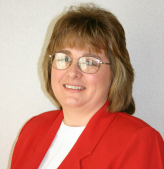 Louise Driver recently joined the staff at Dana College
in Blair, Nebraska as their Director of Financial Aid. Louise comes
from Sheldon Jackson College in Sitka, Alaska! Sheldon Jackson is a
small private college on the island of Sitka where Louise and her
family spent three years prior to trekking all the way to Blair,
Nebraska! She and her husband William, and two daughters, Melissa
and Robyn lived in Sitka enjoying the beauty of Alaska.
Louise Driver recently joined the staff at Dana College
in Blair, Nebraska as their Director of Financial Aid. Louise comes
from Sheldon Jackson College in Sitka, Alaska! Sheldon Jackson is a
small private college on the island of Sitka where Louise and her
family spent three years prior to trekking all the way to Blair,
Nebraska! She and her husband William, and two daughters, Melissa
and Robyn lived in Sitka enjoying the beauty of Alaska.
When asked, and I quote "What in the world brought you to Nebraska?" she had the best response. She said "Every state has its own beauty!" She explained that they loved Nebraska because a person could take a Sunday drive and not have to take the ferry or a plane to get to Walmart. Nebraska is a nice change for several members of the Driver family.
Louise is also grandmother to baby Mercedes, who turned one on September 3rd last year. Her daughter, Melissa and Mercedes stayed in Sitka, and leaving them was a bit harder than she thought it would be. She does keep busy with her hobbies of walking and reading.
Before Alaska, Louise worked for 15 years in Financial Aid at Henderson State University which is located in Arkadelphia, Arkansas. This also happens to be where she got her bachelor's degree.
When asked what she loved about financial aid, she said she loves helping students and parents. And when she was asked what she didn't love, she said this was the first year she had done the FISAP, and that was none too thrilling.
Be sure to say hello to Louise when you see her next!
September 2004
October 2004 Movers and
Shakers
By Shareen Thewke
Mary Sommers of UNK won three awards this summer. She won the Staff Award for Excellence, University of Nebraska Board of Regents Service Award and Alpha Phi Ursa award.
The Krings' family has grown by two more feet. Mark and Patti welcomed their 4th child, Mariah Claire, on June 20th. Mariah weighed 8 lbs. 9 oz. and was 21 1/2 " in length. Congratulations Krings' family!!
Sarah Sell left EducationQuest in August to join the staff at Creighton University as the Assistant Director. Sarah will be working with new undergraduate students. In addition to the career change, Sarah is also planning a June 2005 wedding.
Paula Kohles of Creighton has been promoted to Associate Director working with graduate and professional students. Way to go Paula!
Shareen Cundall of UNO got married in August. Her new name is harder than her old name. She is now Shareen Thewke!?!?!
EducationQuest in Lincoln welcomes Delmer Esters. Delmer has several years experience in Residence Life and Admissions from UNL. Welcome Delmer!
Ryan Stamm, EducationQuest, was married this June to Sarah Koenigsfeld.
David Duzik of EducationQuest transferred from the Lincoln office to the Omaha office.
Xenon's Lori Overgaard and her husband welcomed a baby boy to their family, Aaron Eugene, on July 23rd. Aaron weighed 7 lbs 15 ½ oz. Congratulations!
Brent Carpenter is the new USA Funds Services Account Executive for Nebraska. He is a prior member of NeASFAA and we welcome him back.
David Powers, Executive Director of the Nebraska Coordinating Commission, is set to retire early 2005. Enjoy!
Pat Siegfried, WNCC, took a job outside financial aid this summer. We wish her well.
Tymaree Tonjes joined the Student Services staff at UNMC. She will get more involved with Financial Aid in the coming months.
Angie Miller from UNMC is expecting child number 2 in 2 months.
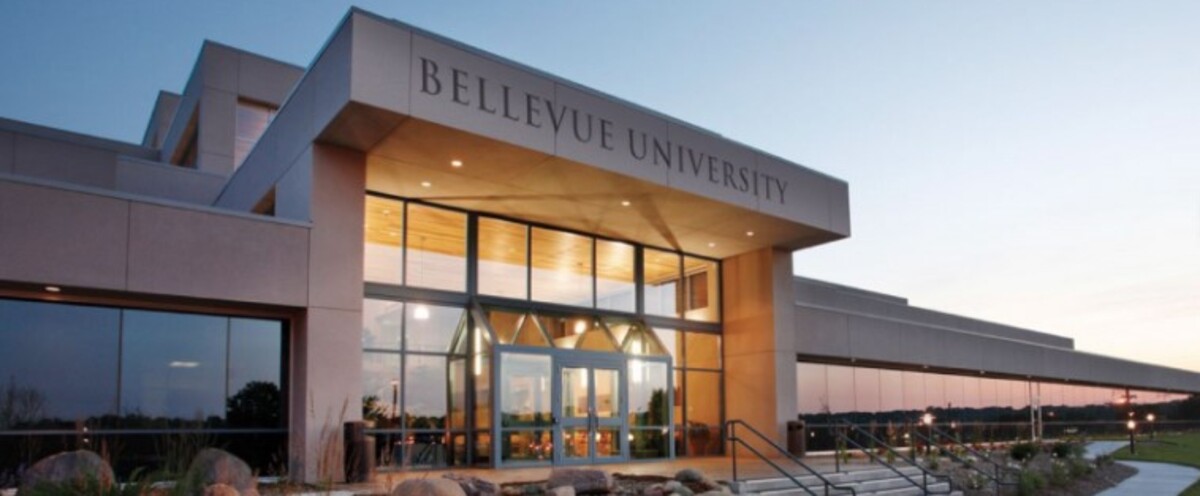
Sarah Felton joined the Bellevue University staff as a Financial Aid Counselor.
NSLP UPDATE
September 2004
Nebraska's
Pell, Campus-Based Aid Expands
by 26% Over 5 Years
by Kent Wolfe
Research Unit
National Student Loan Program
Stafford loans are the
largest source of federal financial assistance for postsecondary
students in Nebraska and other states. Yet administrators of
student loan programs still want to see the Pell Grant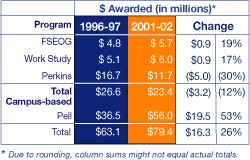 and campus-based programs remain strong so
low-income students will not rely so heavily on debt to attend
college. Given this, NSLP monitors all Title IV aid awarded to
students at the nation's institutions.
and campus-based programs remain strong so
low-income students will not rely so heavily on debt to attend
college. Given this, NSLP monitors all Title IV aid awarded to
students at the nation's institutions.
In 1996-97, postsecondary students in Nebraska received more than $63 million in federal Pell Grants and campus-based aid. Over the next 5 award years, these need-based programs collectively expanded in excess of $16 million, or 26%, to over $79 million in 2001-02. (See table.)
The following graph
highlights financial aid Nebraska students received through these
programs. 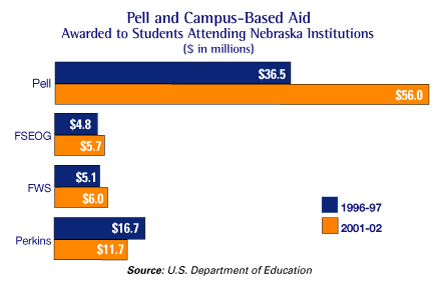
Pell Grants provided considerably higher aid dollars over the 5-year period and grew the most on a relative basis - about 58% of Nebraska's Pell and campus-based aid came from Pell Grants in 1996-97 compared to over 70% in 2001-02. Meanwhile, Perkins fell from 26% of combined Pell and campus-based aid in 1996-97 to less than 15% in 2001-2002.
The data demonstrates that Pell and federal aid other than Stafford and PLUS loans were integral in helping needy Nebraska students access postsecondary education in the late 1990s and early in this decade. Current data about the programs is unavailable, so the impact of recent federal budgetary decisions on funding for the state's students is not yet determined.
For more information about the expansion of Nebraska's Pell and campus-based aid, contact Kent Wolfe at 800-735-8778, ext. 6940 or Mark Krings at ext. 6835.
USADFUNDS UPDATE
September 2004
Setting
Goals Is an Important Student-Retention Step
Submitted by: Brent Carpenter, USA Funds
Services
Establishing clear goals is a key to successfully implementing a plan for enhancing student retention on your campus.
Your priorities for bolstering student retention must have the support and commitment from all campus constituents - especially those involved in the development and delivery of retention strategies. The online guide "Solving the Retention Puzzle" advises that retention goals should be informed by your school's persistence data and other campus-assessment data, both quantitative and qualitative measures. Carefully examine all sources of survey data, and consider input from faculty, staff, students and administrators as you establish the following six student-retention goals:
- Institutional goals. The best-retaining institutions focus on the effectiveness of campus-wide retention programs and services such as advising, quality service and student tracking.
- Recruitment goals. The best-retaining institutions focus on recruiting students who have the greatest opportunities to be successful, based on past student performances.
- Persistence goals. The best-retaining institutions may choose to focus on improving the success rates of all students or of specific groups of students, such as those in specific majors, athletes, minorities or others.
- Student-outcomes goals. The best-retaining institutions focus on improving the quantitative and qualitative outcomes of the educational experience, such as increasing the freshman grade-point average, successfully placing students in jobs related to their majors, and increasing the percentage of students getting into the graduate programs of their choice.
- Course goals. The best-retaining institutions focus on improving their students' opportunities for success in individual courses by monitoring the pass/fail rates for "killer" courses, making more tutors available to support specific courses, and increasing the GPA course by course.
- Student-satisfaction goals. The best-retaining institutions focus on both expectations and levels of student satisfaction with a goal of reducing the size of the performance gap (the difference in student expectations and level of satisfaction) for the entire student body or specific groups of students.
"Solving the Retention Puzzle" offers a retention-goal worksheet to complete for each of the goals your campus establishes, and a sample worksheet to guide the development of those goals.
The guide "Solving the Retention Puzzle" is at www.usafunds.org/financial_aid/debt_management/solving_retention_puzzle/, on the USA Funds® Web site. The feature provides guidance to postsecondary institutions about enhancing persistence and graduation rates, thereby contributing to lower student-loan default rates. USA Funds developed "Solving the Retention Puzzle" in cooperation with Noel-Levitz, the nation's leading consultant to higher education on student retention.
Quarterly Quote
September 2004
"Not everything that can be
counted counts, and not everything that counts can be counted."
- Albert Einstein (1879-1955)